A full moon calendar lists the dates when the moon is fully lit, and many people use those nights to reflect, give thanks and let go of what they no longer need. This page shows today's moon phase and the full moon dates for 2026 and 2027, then explains the traditional full moon names, blue moons, and a short ritual.
The tool below shows tonight's moon phase and the upcoming full moons.
Full moon names and what people do with them
Many of the traditional full moon names, popularised in North America by almanacs, come from Native American, colonial and European seasonal calendars. They describe what the natural world was doing at that time of year. The list below follows the common almanac names. The calendar above shows the exact date and time of each full moon for 2026 and 2027, so you can match a name to a night.
| Month | Name | Where the name comes from | A popular way to mark it |
|---|---|---|---|
| January | Wolf Moon | Wolves heard howling in deep winter | Set a quiet intention for the year |
| February | Snow Moon | The heaviest snowfall of the season | Rest, slow down, tidy a corner |
| March | Worm Moon | Soil softening and earthworms returning | Plant a seed or a fresh idea |
| April | Pink Moon | Early spring pink phlox blooming | Write about what is beginning to bloom |
| May | Flower Moon | Flowers in full bloom | Give thanks and bring flowers indoors |
| June | Strawberry Moon | Strawberry harvest season | Enjoy something sweet, share joy |
| July | Buck Moon | Male deer growing new antlers | Notice growth and celebrate progress |
| August | Sturgeon Moon | Sturgeon plentiful in the Great Lakes | Reflect on abundance and gratitude |
| September | Harvest or Corn Moon | The full moon nearest the autumn equinox, when crops were gathered | Count what you have gathered this year |
| October | Hunter's Moon | Hunting season and preparing for winter | Take stock and plan the cold months |
| November | Beaver Moon | Beavers building winter lodges | Make home cosy, prepare |
| December | Cold Moon | Long, cold nights | Reflect on the year, let go |
Names and dates can vary between cultures and calendars, and some traditions use their own. If you have a family or cultural moon name, use that.
What is a blue moon?
The most common modern meaning of a blue moon is the second full moon in one calendar month. An older almanac definition calls the third full moon in a season with four full moons a blue moon. Either way it is a rare extra full moon, which is why people say "once in a blue moon". Some people like to save a special intention or ritual for a blue moon, and treat it as a bonus night to pause and reflect.
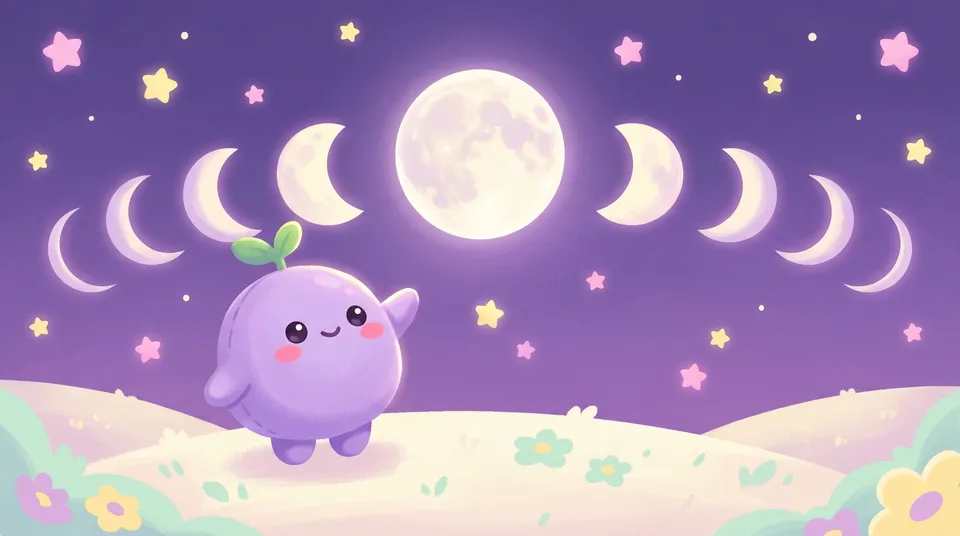
Full moon versus new moon
In many moon traditions, the two ends of the cycle have different jobs. The new moon, when the sky is dark, is a time for planting: setting intentions and starting small. The full moon, when the moon is bright, is a time for harvesting and releasing: noticing what has grown, saying thank you, and letting go of what no longer fits. The waxing period in between is often seen as a time to take steps, and the waning period as a time to soften and clear.
| New moon | Full moon | |
|---|---|---|
| Mood | Quiet, inward, hopeful | Bright, open, reflective |
| Popular focus | Set intentions, begin | Give thanks, release, celebrate |
| Simple practice | Write 3 intentions | Write what to let go of |
For the new moon side, see new moon intentions. For the full moon side, the full moon release ritual has a longer, step-by-step version of what follows.
A short full moon ritual
You do not need special tools. A candle, a pen and about ten minutes are plenty. Here is a gentle version.
- Set the scene. Dim the lights, light a candle if you like, and sit where you can see the sky or a window.
- Breathe. Try a few rounds of 4-2-6 breathing: in for 4, hold for 2, out for 6.
- Give thanks. Write three things that have grown or gone well since the last new moon. Small counts.
- Release. Write one thing you are ready to let go of: a worry, a habit, a grudge. Say it out loud, then tear the paper or fold it away safely.
- Close with a line. Finish with a kind sentence such as "I make room for what is next."
Keep it flexible. Cloudy sky, late night, busy evening? The moon is still there. Do the ritual the night before or after, or do the short version: one thank-you and one release. Consistency matters more than the perfect moment.
Full moon ideas for each mood
Different nights call for different rituals, and there is no need to do the same thing each month.
- Feeling scattered. Try a five-minute brain dump before bed. Write every thought down, then close the notebook.
- Feeling low on energy. Take a short walk under the moon or sit by an open window. Rest counts as part of the ritual.
- Feeling thankful. Make a small gratitude list, or add slips to a wish jar or gratitude jar.
- Feeling stuck. Use a journal prompt such as "What am I ready to stop carrying?"
- Feeling social. Share a walk or a cup of tea with a friend, and each name one thing you are letting go of.
Moon rituals and how to hold them
People have watched the moon for thousands of years, and for many it is a gentle way to punctuate the month. You may enjoy reading about crystals for manifestation or intention setting to add depth. If you come from a religious or cultural tradition with its own way of marking the moon, you are welcome to mix it in. What matters is that it feels warm and personal.
If you are curious about the science of the lunar cycle, NASA's moon phases page explains why the moon changes shape and how the phases are timed.
A full moon ritual is a chance to pause. If the pause makes you feel calmer and clearer, it has done its job. Try to leave the evening free of expectations, and avoid using the ritual to demand a particular result. Spending ten quiet minutes with your own thoughts is a good outcome in itself.
Where manifestlings fits
Rituals are easier when something friendly is waiting for you. manifestlings is a virtual pet, a dreamling, that grows on what you practise. Around it sit a wish you can look at again, a short game made from your words, small rituals, care on the real clock, and a guided meditation with 4-2-6 breathing.
It is coming soon to the App Store for iPhone, with Android later. You sign in once, and every new account starts with 7 days of Premium free, followed by a free core. You can read who makes it on the about page.
Questions people ask
What are the names of the full moons?
The common almanac names are Wolf, Snow, Worm, Pink, Flower, Strawberry, Buck, Sturgeon, Harvest or Corn, Hunter's, Beaver and Cold. Some years add a blue moon.
What is a blue moon?
Today it usually means a second full moon in a calendar month. An older definition counts the third full moon in a season that has four.
What should I do on a full moon?
Common choices are writing down what you are thankful for, releasing something you are ready to let go of, taking a quiet walk, or simply looking up at the sky for a few minutes.
Can I do a full moon ritual if it is cloudy?
Yes. The moon is still full behind the clouds, and you can do the ritual indoors or the night before or after.