

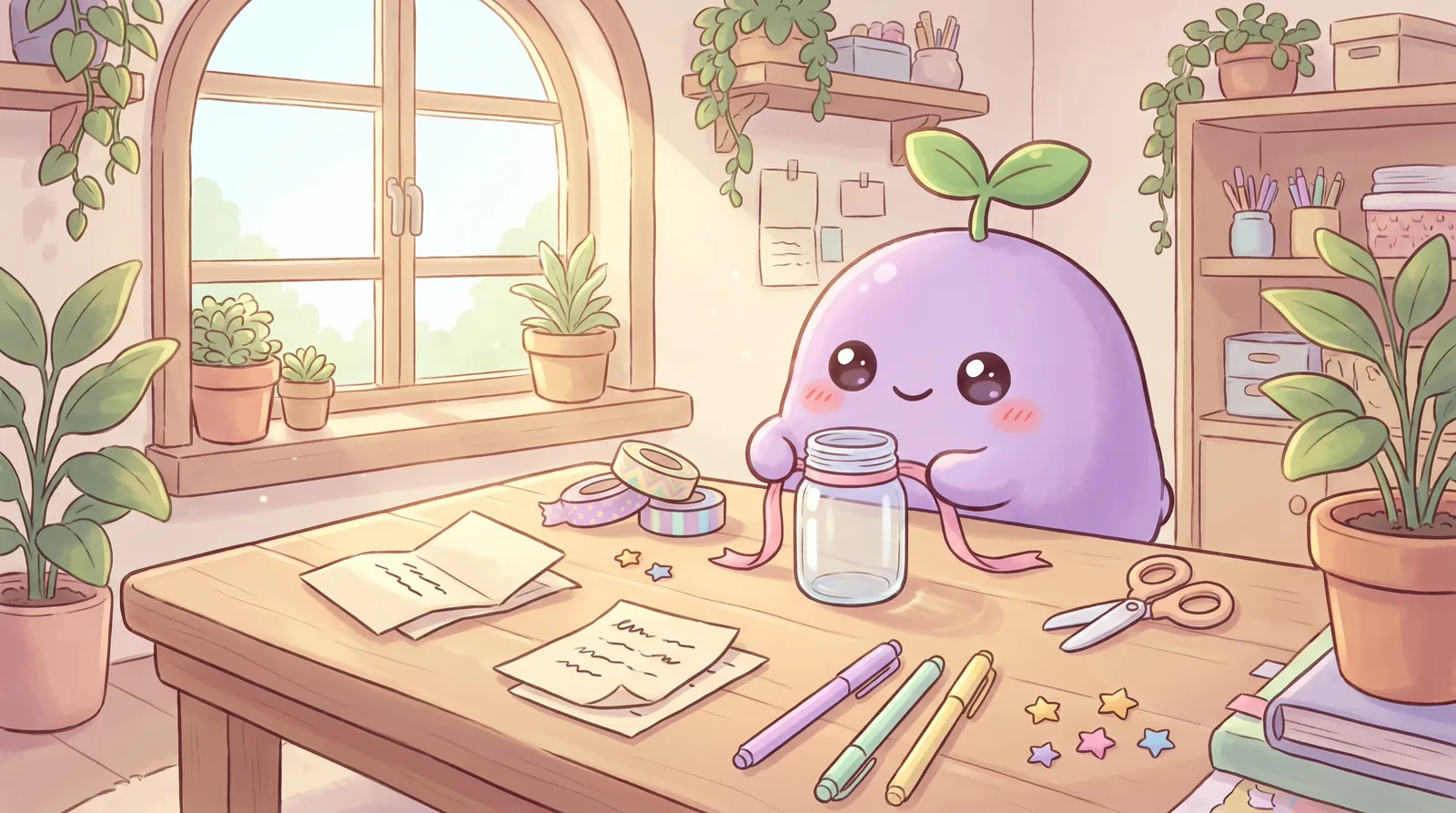
A wish jar is a glass jar where you drop folded paper slips, each one holding a wish, an intention or a hope. A gratitude jar works the same way, but the slips hold thank-yous. You can make either in ten minutes with things from a kitchen drawer, and the practice is simple enough to keep going for years. This guide covers materials, rules, example phrases, a digital version and how to pair the two jars.
What a wish jar and a gratitude jar are
The wish jar is a place to put things you want. It might be a trip, a calmer month, a new job, a friendship that feels warmer. Writing the wish on paper and putting it somewhere physical turns a passing thought into something you can hold and return to.
The gratitude jar looks backward instead of forward. Each slip records something good that already happened: a kind message, a warm coffee, a hard task finished. Over months the jar fills, and on a rough day you can pour out a handful and read what was actually true.
Neither jar makes anything happen on its own. They are containers for attention. The wish jar keeps your goals in sight, and the gratitude jar keeps your progress and small pleasures in sight. Together they make a tidy, private, screen-free ritual.
Materials you need
You do not need a craft store trip. Here is the basic kit, plus a few optional extras.

- A clean glass jar with a lid. A jam jar, a pasta sauce jar or a mason jar all work. Soak the label off in warm soapy water.
- Paper slips. Cut a sheet into strips about 2 cm by 10 cm, or use sticky notes, or small squares of coloured paper.
- A pen you like writing with. Gel pens and fine markers feel nicer than a dry ballpoint.
- A label, or a strip of washi tape, to name each jar.
- Optional: ribbon, a small charm, fairy lights coiled inside, or stickers.
Two jars in different colours keep things clear. Many people use a warm tone for gratitude and a cool one for wishes, or a different ribbon on each. If you have only one jar, a coloured paper system also works: yellow slips for gratitude, pink slips for wishes.
How to make your wish jar, step by step
Set aside about fifteen minutes and a quiet corner. Play music if you like.
Start by cleaning and drying the jar. Decorate the outside first while you have a clear head, since glue and paint do better on a dry surface. Then give the jar a name on its label, something like "wishes" or "things I want to grow".
Next, write your first three wishes. Keep each one to a sentence. Fold the slips and drop them in. Screw the lid on and put the jar somewhere you see every day, such as a desk, a bedside table or a kitchen shelf. Out of sight tends to mean forgotten.
If you want a step before this one, a short intention setting practice helps you decide what deserves a slip.
The rules that make it work
A jar with no rules turns into a drawer of half-finished slips. A few light rules keep it alive.
| Rule | Why it helps |
|---|---|
| One wish per slip | Keeps each wish clear and easy to review |
| Write in the present or as a small step | "I am learning to swim" is easier to feel than "I hope someday" |
| Date every slip | Shows you how much time has passed when you read it later |
| Do not open early | Gives the wishes room, and stops the jar becoming a checklist you keep poking |
| Set a review day | A monthly or seasonal opening keeps it useful |
| Add an action to a wish | A wish plus one small step is easier to move than a wish alone |
On review day, empty the wish jar and read every slip. Some wishes will have arrived. Some will have changed. Some will feel like they belong to a different version of you. Move the ones that still fit back into the jar, set aside the ones that came true, and quietly retire the rest. Retiring a wish is allowed. It is a healthy part of letting go in manifestation.
Example phrases to copy
Blank paper can freeze you. Here are phrases to borrow and bend.
For the wish jar:
- I want a weekend with no plans and nothing to prove.
- I am building a savings cushion, one small deposit at a time.
- I would love a friend I can text at midnight and still feel understood.
- I am learning to speak up in meetings.
- I want to finish the first draft of my story.
For the gratitude jar:
- The bus was on time and the seat by the window was free.
- My sister sent a photo of her dog for no reason.
- I said no to something and the world kept turning.
- The soup turned out well.
- I slept a full night for the first time in a week.
For more ways to start a gratitude line, gratitude journal prompts has plenty, and short affirmations works well for wishes that are really about how you want to feel.
Pairing wishes with thank-yous
The two jars do their best work side by side. A wish keeps your eyes on what is ahead. A thank-you reminds you that your life already has good things in it, so the wanting does not turn into a constant sense of lack.
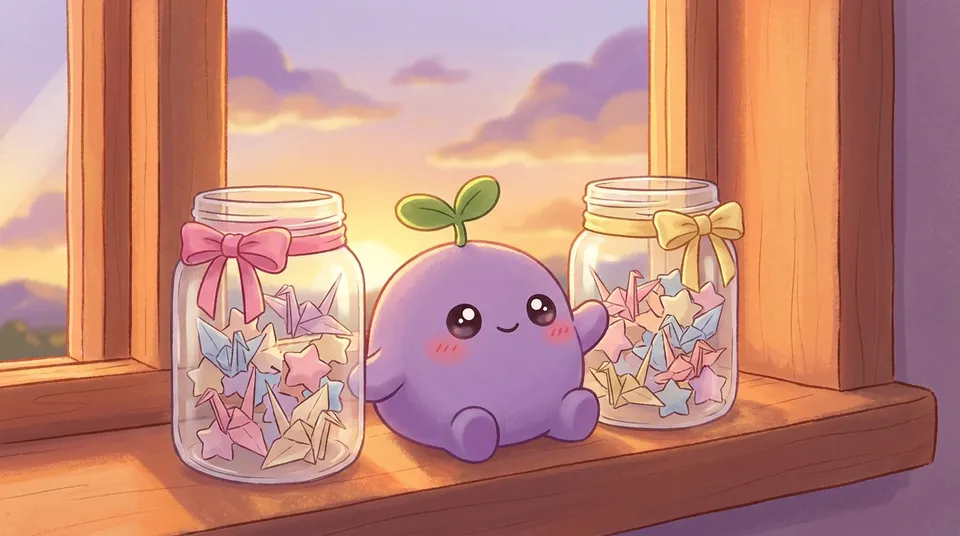
Here is a simple rhythm. Each evening, write one gratitude slip. Once a week, on the same day, write one wish slip. That ratio of many thank-yous to a few wishes tends to feel balanced. Then, once a month, sit with both jars. Read the wishes, then read the thank-yous, and ask if any wish has a gratitude slip that quietly answers it. Sometimes a wish you wrote in spring has been answered by three small ordinary things, and you had not noticed.
You can also pair them in a single sitting. Write the thing you want, then write one thing you already have that is close to it. A wish for a closer friendship sits next to a thank-you for the one text that made you laugh today. Doing this keeps the practice honest and warm.
A digital version
Not everyone wants a shelf full of jars. You can build a digital version in ten minutes.
- Make two notes in any notes app, one called Wishes and one called Thank-yous. Add a new line with the date for every entry.
- Use a spreadsheet with a date column, a type column and a text column. Filter by type on review day.
- Use a photo album called Jar and screenshot the tiny things you want to remember.
- Set a phone reminder for your monthly review, since digital lists are easy to forget.
The main difference is friction. Paper is slower and more tactile, which many people find calming. A note is faster and always with you. Pick the one you will actually open. If you like the idea of a wish that you can look at again on your phone, a vision board app is a close cousin.
Where manifestlings fits
The real-world jars above stand on their own, and you do not need an app for them. If you would like a companion for the same habit, manifestlings is a virtual pet, a dreamling, that grows on what you practise. Alongside it sit a wish you can look at again, a short game made from your words, small rituals, care on the real clock, and a guided meditation with 4-2-6 breathing.
It is coming to the App Store for iPhone, with Android later. You sign in once, and every new account starts with 7 days of Premium free, followed by a free core. Some people keep a paper jar and use the app for the daily nudge; the two do not compete.
Common mistakes
The first is writing wishes as demands aimed at other people, such as "my boss respects me." Reword it to something you can act on: "I am asking for feedback every Friday." The second is filling the jar in one burst of energy and never opening it again. Set the review date on a calendar before you close the lid.
The third is treating an empty gratitude jar as a failure. Some weeks are thin. Write a small one anyway: "I stayed inside and it was fine." If gratitude feels forced during a hard period, that is worth respecting rather than pushing through, and self-care ideas for a bad day may fit better for now.
Research on writing down things you are grateful for suggests it can lift mood for some people, though results vary. The Greater Good Science Center at UC Berkeley collects readable summaries if you want to go deeper.
Questions people ask
What is a wish jar?
A wish jar is a glass jar where you keep folded paper slips, each holding one wish or intention. You review them on a set day, keep the ones that still fit and retire the rest.
What is the difference between a wish jar and a gratitude jar?
A wish jar looks forward and holds things you want. A gratitude jar looks back and holds good things that already happened. Many people keep both and read them together once a month.
How often should I open my jar?
Once a month or once a season works well for a wish jar. A gratitude jar can be opened on a hard day when you want a reminder of what has gone well.
Does a wish jar make wishes come true?
No, and nothing here promises that. The jar keeps your goals visible and pairs well with one small action, which is the part that tends to move things.